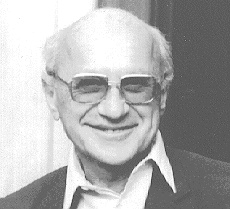
 A society that puts equality before freedom will get neither.
A society that puts freedom before equality will get a high degree of both.
– Milton Friedman, from Created Equal, Free to Choose television series
A society that puts equality before freedom will get neither.
A society that puts freedom before equality will get a high degree of both.
– Milton Friedman, from Created Equal, Free to Choose television series

The founders intended the Constitution to apply to Americans, aliens, citizens, non-citizens, lawful combatants, enemy combatants, innocents, the guilty, those who wish us well, and those who wish us ill.
The Constitution applies to persons, not just citizens.
If you read the Constitution, its protections are not limited to Americans.
And that was written intentionally, because at the time it was written, they didn’t know what Native Americans would be.
When the post civil war amendments were added, they didn’t know how blacks would be considered, because they had a decision of the Supreme Court called Dred Scott, that said blacks are not persons.
So in order to make sure the Constitution protected every human being:
…they use the broadest possible language,
to make it clear:
Wherever the government goes,
the Constitution goes,
and wherever the Constitution goes,
the protections that it guarantees restrain the government
and requires it to protect those rights.
— Judge Andrew Napolitano

Areopagitica is regarded as one of the most eloquent defences of press freedom ever written.
Give me the liberty to know, to utter, and to argue freely according to conscience, above all liberties.
– John Milton, Areopagitica: A speech of Mr. John Milton for the liberty of unlicensed printing to the Parliament of England, 1644
 If you analyze it I believe the very heart and soul of conservatism is libertarianism.
I think conservatism is really a misnomer just as liberalism is a misnomer for the liberals — if we were back in the days of the Revolution, so-called conservatives today would be the Liberals and the liberals would be the Tories.
The basis of conservatism is a desire for less government interference or less centralized authority or more individual freedom and this is a pretty general description also of what libertarianism is.
– Ronald Reagan, “Inside Ronald Reagan”, Reason magazine, July 1975
 Sell not virtue to purchase wealth, nor Liberty to purchase power.
– Ben Franklin, Poor Richard’s Almanack
 The evils we experience flow from the excess of democracy. The people do not want virtue, but are the dupes of pretended patriots.
Elbridge Gerry, Constitutional Convention, Monday, May 31, 1787
 Whereas civil rulers, not having their duty to the people duly before them, may attempt to tyrannize, and as the military forces which must be occasionally raised to defend our country, might pervert their power to the injury of their fellow citizens, the people are confirmed by the article in their right to keep and bear their private arms.
— Tench Coxe, “Remarks on the First Part of the Amendments to the Federal Constitution,” under the pseudonym “A Pennsylvanian” in the Philadelphia Federal Gazette, June 18, 1789.
 One of the annoying things about believing in free will and individual responsibility is the difficulty of finding somebody to blame your problems on.
And when you do find somebody, it’s remarkable how often his picture turns up on your driver’s license.
– P. J. O’Rourke, Rolling Stone Magazine, November 1989
 Of all the enemies to public liberty war is, perhaps, the most to be dreaded, because it comprises and develops the germ of every other. War is the parent of armies; from these proceed debts and taxes; and armies, and debts, and taxes are the known instruments for bringing the many under the domination of the few.
In war, too, the discretionary power of the Executive is extended; its influence in dealing out offices, honors, and emoluments is multiplied; and all the means of seducing the minds, are added to those of subduing the force, of the people.
The same malignant aspect in republicanism may be traced in the inequality of fortunes, and the opportunities of fraud, growing out of a state of war, and in the degeneracy of manners and of morals engendered by both.
No nation could preserve its freedom in the midst of continual warfare.
— James Madison, Political Observations, 1795
 I favor the policy of economy, not because I wish to save money, but because I wish to save people.
The men and women of this country who toil are the ones who bear the cost of the Government. Every dollar that we carelessly waste means that their life will be so much the more meager.
Every dollar that we prudently save means that their life will be so much the more abundant. Economy is idealism in its most practical form.
— Calvin Coolidge, 1924 Inaugural Address
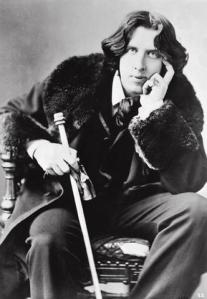 People sometimes inquire what form of government is most suitable for an artist to live under. To this question there is only one answer. The form of government that is most suitable to the artist is no government at all.
– Oscar Wilde, The Soul of Man Under Socialism
 Many politicians of our time are in the habit of laying it down as a self-evident proposition, that no people ought to be free till they are fit to use their freedom.
The maxim is worthy of the fool in the old story, who resolved not to go into the water till he had learnt to swim. If men are to wait for liberty till they become wise and good in slavery, they may indeed wait for ever.
— Thomas Babington Macaulay, Essays Contributed to the ‘Edinburgh Review’ vol. 1 ‘Milton’ (1843)
 That principle is, that the sole end for which mankind are warranted, individually or collectively in interfering with the liberty of action of any of their number, is self-protection. That the only purpose for which power can be rightfully exercised over any member of a civilized community, against his will, is to prevent harm to others. His own good, either physical or moral, is not a sufficient warrant.
He cannot rightfully be compelled to do or forbear because it will be better for him to do so, because it will make him happier, because, in the opinions of others, to do so would be wise, or even right. These are good reasons for remonstrating with him, or reasoning with him, or persuading him, or entreating him, but not for compelling him, or visiting him with any evil, in case he do otherwise.
— John Stewart Mill, On Liberty ch. 1 (1859)
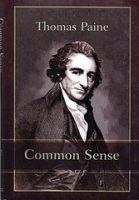
Common Sense, the book advocating secession from the British empire and credited with starting the Revolution, was the top-selling book of the 18th century, globally.
Government, even in its best state, is but a necessary evil; in its worst state, an intolerable one.
Government, like dress, is the badge of lost innocence; the palaces of kings are built upon the ruins of the bowers of paradise.
— Thomas Paine, Common Sense

John DeWitt was the pseudonym used by a Founder in the writing of several key Anti-Federalist Papers, in defense of individual liberty. The name was chosen in homage to a famous Dutch patriot.
It is asserted by the most respectable writers upon Government, that a well regulated militia, composed of the yeomanry of the country have ever been considered as the bulwark of a free people; and, says the celebrated Mr. Hume;
“without it, it is folly to think any free government will have stability or security. When the sword is introduced, as in our constitution (speaking of the British) the person entrusted will always neglect to discipline the militia, in order to have a pretext for keeping up a standing army; and it is evident this is a mortal distemper in the British parliament, of which it must finally inevitably perish.”
— John DeWitt, Antifederalist Papers, John Dewitt IV
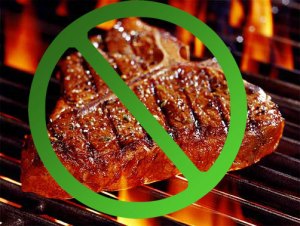 The whole principle is wrong. It’s like demanding that grown men live on skim milk because the baby can’t have steak.
— Robert Heinlein, The Man Who Sold the Moon (1949), on censorship
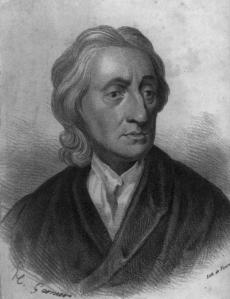 The end of Law is not to abolish or restrain, but to preserve and enlarge Freedom.
— John Locke, Two Treatises of Government (1689)
 I heartily accept the motto, ‘That government is best which governs least’; and I should like to see it acted up to more rapidly and systematically. Carried out, it finally amounts to this, which also I believe–‘That government is best which governs not at all’; and when men are prepared for it, that will be the kind of government which they will have. —Henry David Thoreau, Civil Disobedience (1849)
 Thought that is silenced is always rebellious. Majorities, of course, are often mistaken. This is why the silencing of minorities is necessarily dangerous. Criticism and dissent are the indispensable antidote to major delusions.
— Alan Barth, The Loyalty of Free Men (1951)
 Taxation of earnings from labor is on a par with forced labor. Seizing the results of someone’s labor is equivalent to seizing hours from him and directing him to carry on various activities.
– Robert Nozick, Anarchy, State, and Utopia
 That all men are by nature equally free and independent, and have certain inherent rights, of which, when they enter into a state of society, they cannot, by any compact, deprive or divest their posterity; namely, the enjoyment of life and liberty, with the means of acquiring and possessing property, and pursuing and obtaining happiness and safety.
— George Mason, Virginia Declaration of Rights, (1776)
In recent years it has been suggested that the Second Amendment protects the “collective” right of states to maintain militias, while it does not protect the right of “the people” to keep and bear arms…The phrase “the people” meant the same thing in the Second Amendment as it did in the First, Fourth, Ninth and Tenth Amendments — that is, each and every free person.
A select militia defined as only the privileged class entitled to keep and bear arms was considered an anathema to a free society, in the same way that Americans denounced select spokesmen approved by the government as the only class entitled to the freedom of the press.
If anyone entertained this notion in the period during which the Constitution and Bill of Rights were debated and ratified, it remains one of the most closely guarded secrets of the 18th century, for no known writing surviving from the period between 1787 and 1791 states such a thesis.
– Stephen P. Holbrook, That Every Man Be Armed: The Evolution of a Constitutional Right

Because the first two amendments of the Bill of Rights were not ratified, the right to keep and bear arms was actually number four in the original document
You Own Your Own Life…
To lose your Life is to lose your Future, to lose your Liberty is to lose your Present
…and to lose the product of your Life and Liberty is to lose that portion of your Past that produced it
A product of you Life and Liberty is your Property
— Ken Schoolland, The Philosophy of Liberty
 The government that seems the most unwise,
Oft goodness to the people best supplies;
That which is meddling, touching everything,
Will work but ill, and disappointment bring.
– Tao Te Ching
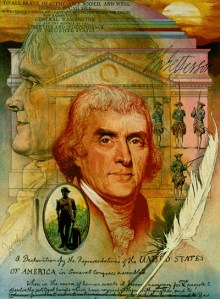 Sometimes it is said that man can not be trusted with the government of himself. Can he, then, be trusted with the government of others? Or have we found angels in the forms of kings to govern him?
– Thomas Jefferson, First Inaugural Address (1801)
 Till the mischief be grown general, and the ill designs of the rulers become visible, or their attempts sensible to the greater part, the people, who are more disposed to suffer than right themselves by resistance, are not apt to stir.
The examples of particular injustice, or oppression of here and there an unfortunate man, moves them not. But if they universally have a persuation, grounded upon manifest evidence,that designs are carrying on against their liberties, and the general course and tendency of things cannot but give them strong suspicions of the evil intention of their governors, who is to be blamed for it?
–John Locke, The Second Treatise of Civil Government
 “My country, right or wrong,” is a thing that no patriot would think of saying except in a desperate case. It is like saying, “My mother, drunk or sober”.
– G. K. Chesterton, A Defence of Patriotism
How, Exactly, Are They Defending Our Freedom?
 The smallest minority on earth is the individual. Those who deny individual rights cannot claim to be defenders of minorities.
– Ayn Rand, Capitalism: The Unknown Ideal
 If you think health care is expensive now, wait until you see what it costs when it’s free.
– P. J. O’Roarke, The Liberty Manifesto
Who Are the 47 Million Uninsured?
 Whoever will be free must make himself free. Freedom is no fairy gift to fall into a man’s lap. What is freedom? To have the will to be responsible for one’s self.
— Max Stirner
source unknown, please tell us if you know
 The State always moves slowly and grudgingly towards any purpose that accrues to society’s advantage, but moves rapidly and with alacrity towards one that accrues to its own advantage; nor does it ever move towards social purposes on its own initiative, but only under heavy pressure, while its motion towards anti-social purposes is self-sprung.
— Albert Jay Nock “Our Enemy, the State“
 But Now You Know
 The best Jihad


 Words of the Sentient