People sometimes inquire what form of government is most suitable for an artist to live under. To this question there is only one answer. The form of government that is most suitable to the artist is no government at all.
Many politicians of our time are in the habit of laying it down as a self-evident proposition, that no people ought to be free till they are fit to use their freedom.
The maxim is worthy of the fool in the old story, who resolved not to go into the water till he had learnt to swim. If men are to wait for liberty till they become wise and good in slavery, they may indeed wait for ever.
I cannot accept your canon that we are to judge Pope and King unlike other men, with a favorable presumption that they did not wrong. If there is any presumption it is the other way against holders of power, increasing as the power increases. Historic responsibility has to make up for the want of legal responsibility.
All power tends to corrupt and absolute power corrupts absolutely. Great men are almost always bad men, even when they exercise influence and not authority: still more when you superadd the tendency or the certainty of corruption by authority.
That principle is, that the sole end for which mankind are warranted, individually or collectively in interfering with the liberty of action of any of their number, is self-protection. That the only purpose for which power can be rightfully exercised over any member of a civilized community, against his will, is to prevent harm to others. His own good, either physical or moral, is not a sufficient warrant.
He cannot rightfully be compelled to do or forbear because it will be better for him to do so, because it will make him happier, because, in the opinions of others, to do so would be wise, or even right. These are good reasons for remonstrating with him, or reasoning with him, or persuading him, or entreating him, but not for compelling him, or visiting him with any evil, in case he do otherwise.
Common Sense, the book advocating secession from the British empire and credited with starting the Revolution, was the top-selling book of the 18th century, globally.
Government, even in its best state, is but a necessary evil; in its worst state, an intolerable one.
Government, like dress, is the badge of lost innocence; the palaces of kings are built upon the ruins of the bowers of paradise. — Thomas Paine, Common Sense
Hence the less government we have the better–the fewer laws and the less confided power.
The antidote to this abuse of formal government is the influence of private character, the growth of the Individual; the appearance of the principal to supersede the proxy; the appearance of the wise man; of whom the existing government is, it must be owned, but a shabby imitation.
John DeWitt was the pseudonym used by a Founder in the writing of several key Anti-Federalist Papers, in defense of individual liberty. The name was chosen in homage to a famous Dutch patriot.
It is asserted by the most respectable writers upon Government, that a well regulated militia, composed of the yeomanry of the country have ever been considered as the bulwark of a free people; and, says the celebrated Mr. Hume;
“without it, it is folly to think any free government will have stability or security. When the sword is introduced, as in our constitution (speaking of the British) the person entrusted will always neglect to discipline the militia, in order to have a pretext for keeping up a standing army; and it is evident this is a mortal distemper in the British parliament, of which it must finally inevitably perish.”
The whole principle is wrong. It’s like demanding that grown men live on skim milk because the baby can’t have steak. — Robert Heinlein, The Man Who Sold the Moon (1949), on censorship
Our government has kept us in a perpetual state of fear — kept us in a continuous stampede of patriotic fervor — with the cry of grave national emergency.
Always there has been some terrible evil at home or some that was going to gobble us up if we did not blindly rally behind it by furnishing the exorbitant funds demanded.
Yet, in retrospect, these disasters seem never to have happened, seem never to have been quite real.
– General Douglas MacArthur, A Soldier Speaks: Public Papers and Speeches of General of the Army Douglas MacArthur (1965)
I heartily accept the motto, ‘That government is best which governs least’; and I should like to see it acted up to more rapidly and systematically. Carried out, it finally amounts to this, which also I believe–‘That government is best which governs not at all’; and when men are prepared for it, that will be the kind of government which they will have. —Henry David Thoreau, Civil Disobedience (1849)
Usually, writers will do anything to avoid writing.
For instance, the previous sentence was written at one o’clock this afternoon. It is now a quarter to four. I have spent the past two hours and forty-five minutes:
Sorting my neckties by width,
looking up the word paisly in three dictionaries,
attempting to find the town of that name on The New York Times Atlas of the World map of Scotland,
sorting my reference books by width,
trying to get the bookcase to stop wobbling by stuffing a matchbook cover under its corner,
dialing the telephone number on the matchbook cover to see if I should take computer courses at night,
looking at the computer ads in the newspaper and deciding to buy a computer because writing seems to be so difficult on my old Remington,
reading an interesting article on sorghum farming in Uruguay that was in the newspaper next to the computer ads,
cutting that and other interesting articles out of the newspaper,
sorting – by width – all the interesting articles I’ve cut out of newspapers recently,
fastening them neatly together with paper clips and making a very attractive paper clip necklace and bracelet set…
…which I will present to my girlfriend as soon as she comes home from the three-hour low-impact aerobic workout that I made her go to so I could have some time alone to write.
– P.J. O’Rourke, The Wit and Wisdom of P. J. O’Rourke
The US Code, only a subset of all laws and regulations on the books today. The US imprisons a higher percentage of its populace than Communist China does, more than Iran, more than did the Soviet Union, Saddam Hussein's Iraq, or the Taliban's Afghanistan.
America needs fewer laws, not more prisons.
By trying to seize far more power than is necessary over American citizens, the federal government is destroying its own legitimacy.
We face a choice not of anarchy or authoritarianism, but a choice of limited government or unlimited government.
Thought that is silenced is always rebellious. Majorities, of course, are often mistaken. This is why the silencing of minorities is necessarily dangerous. Criticism and dissent are the indispensable antidote to major delusions.
Taxation of earnings from labor is on a par with forced labor. Seizing the results of someone’s labor is equivalent to seizing hours from him and directing him to carry on various activities. – Robert Nozick, Anarchy, State, and Utopia
That all men are by nature equally free and independent, and have certain inherent rights, of which, when they enter into a state of society, they cannot, by any compact, deprive or divest their posterity; namely, the enjoyment of life and liberty, with the means of acquiring and possessing property, and pursuing and obtaining happiness and safety.
It was pleasant to me to get a letter from you the other day. Perhaps I should have found it pleasanter if I had been able to decipher it. I don’t think that I mastered anything beyond the date (which I knew) and the signature (which I guessed at).
There’s a singular and a perpetual charm in a letter of yours; it never grows old, it never loses its novelty…Other letters are read and thrown away and forgotten, but yours are kept forever
– unread. One of them will last a reasonable man a lifetime.
All Wars are Follies, very expensive, and very mischievous ones. When will Mankind be convinced of this, and agree to settle their Differences by Arbitration? Were they to do it, even by the Cast of a Dye, it would be better than by Fighting and destroying each other.
In recent years it has been suggested that the Second Amendment protects the “collective” right of states to maintain militias, while it does not protect the right of “the people” to keep and bear arms…The phrase “the people” meant the same thing in the Second Amendment as it did in the First, Fourth, Ninth and Tenth Amendments — that is, each and every free person.
A select militia defined as only the privileged class entitled to keep and bear arms was considered an anathema to a free society, in the same way that Americans denounced select spokesmen approved by the government as the only class entitled to the freedom of the press.
If anyone entertained this notion in the period during which the Constitution and Bill of Rights were debated and ratified, it remains one of the most closely guarded secrets of the 18th century, for no known writing surviving from the period between 1787 and 1791 states such a thesis.
– Stephen P. Holbrook, That Every Man Be Armed: The Evolution of a Constitutional Right
Because the first two amendments of the Bill of Rights were not ratified, the right to keep and bear arms was actually number four in the original document
When an opponent declares, “I will not come over to your side,” I calmly say, “Your child belongs to us already…What are you? You will pass on. Your descendants, however, now stand in the new camp. In a short time they will know nothing else but this new community.”
— Adolf Hitler, on Public Education, speech in November 1933
The political principle that underlies the market mechanism is unanimity. In an ideal free market resting on private property, no individual can coerce any other, all cooperation is voluntary, all parties to such cooperation benefit or they need not participate.
The government that seems the most unwise,
Oft goodness to the people best supplies;
That which is meddling, touching everything,
Will work but ill, and disappointment bring. – Tao Te Ching
Greenpeace fund-raisers on the subject of global warming are not much different than tribal wizards on the subject of lunar eclipses. “Oh no, the Night Wolf is eating the Moon Virgin. Give me some silver and I’ll make him spit her out.”

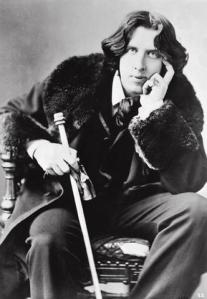 People sometimes inquire what form of government is most suitable for an artist to live under. To this question there is only one answer. The form of government that is most suitable to the artist is no government at all.
 Many politicians of our time are in the habit of laying it down as a self-evident proposition, that no people ought to be free till they are fit to use their freedom.
 I cannot accept your canon that we are to judge Pope and King unlike other men, with a favorable presumption that they did not wrong. If there is any presumption it is the other way against holders of power, increasing as the power increases. Historic responsibility has to make up for the want of legal responsibility.
 That principle is, that the sole end for which mankind are warranted, individually or collectively in interfering with the liberty of action of any of their number, is self-protection. That the only purpose for which power can be rightfully exercised over any member of a civilized community, against his will, is to prevent harm to others. His own good, either physical or moral, is not a sufficient warrant.
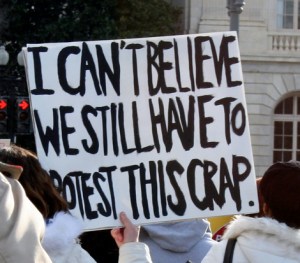 The best Jihad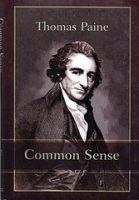
 Hence the less government we have the better–the fewer laws and the less confided power.
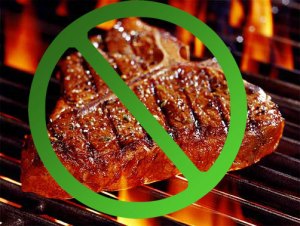 The whole principle is wrong. It’s like demanding that grown men live on skim milk because the baby can’t have steak.
 The end of Law is not to abolish or restrain, but to preserve and enlarge Freedom.
 Our government has kept us in a perpetual state of fear — kept us in a continuous stampede of patriotic fervor — with the cry of grave national emergency.
 Solvency is maintained by means of a national debt, on the principle, “If you will not lend me the money, how can I pay you?”
 Usually, writers will do anything to avoid writing.
 The methods by which a trade union can alone act, are necessarily destructive; its organization is necessarily tyrannical.
 A government which robs Peter to pay Paul, can always count on the support of Paul.
 Thought that is silenced is always rebellious. Majorities, of course, are often mistaken. This is why the silencing of minorities is necessarily dangerous. Criticism and dissent are the indispensable antidote to major delusions.
 That all men are by nature equally free and independent, and have certain inherent rights, of which, when they enter into a state of society, they cannot, by any compact, deprive or divest their posterity; namely, the enjoyment of life and liberty, with the means of acquiring and possessing property, and pursuing and obtaining happiness and safety.
 It was pleasant to me to get a letter from you the other day. Perhaps I should have found it pleasanter if I had been able to decipher it. I don’t think that I mastered anything beyond the date (which I knew) and the signature (which I guessed at).
 All Wars are Follies, very expensive, and very mischievous ones. When will Mankind be convinced of this, and agree to settle their Differences by Arbitration? Were they to do it, even by the Cast of a Dye, it would be better than by Fighting and destroying each other.
 The mind is like the stomach. It is not how much you put into it that counts, but how much it digests.
 When an opponent declares, “I will not come over to your side,” I calmly say, “Your child belongs to us already…What are you? You will pass on. Your descendants, however, now stand in the new camp. In a short time they will know nothing else but this new community.”
 Imagine if all of life were determined by majority rule.
 The political principle that underlies the market mechanism is unanimity. In an ideal free market resting on private property, no individual can coerce any other, all cooperation is voluntary, all parties to such cooperation benefit or they need not participate.
 Can any of you seriously say the Bill of Rights could get through Congress today?
 The government that seems the most unwise,
 Greenpeace fund-raisers on the subject of global warming are not much different than tribal wizards on the subject of lunar eclipses. “Oh no, the Night Wolf is eating the Moon Virgin. Give me some silver and I’ll make him spit her out.”


 Words of the Sentient