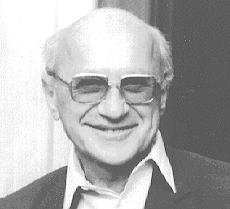
 A society that puts equality before freedom will get neither.
A society that puts freedom before equality will get a high degree of both.
– Milton Friedman, from Created Equal, Free to Choose television series
A society that puts equality before freedom will get neither.
A society that puts freedom before equality will get a high degree of both.
– Milton Friedman, from Created Equal, Free to Choose television series

The founders intended the Constitution to apply to Americans, aliens, citizens, non-citizens, lawful combatants, enemy combatants, innocents, the guilty, those who wish us well, and those who wish us ill.
The Constitution applies to persons, not just citizens.
If you read the Constitution, its protections are not limited to Americans.
And that was written intentionally, because at the time it was written, they didn’t know what Native Americans would be.
When the post civil war amendments were added, they didn’t know how blacks would be considered, because they had a decision of the Supreme Court called Dred Scott, that said blacks are not persons.
So in order to make sure the Constitution protected every human being:
…they use the broadest possible language,
to make it clear:
Wherever the government goes,
the Constitution goes,
and wherever the Constitution goes,
the protections that it guarantees restrain the government
and requires it to protect those rights.
— Judge Andrew Napolitano

Any time someone tells you that even an unfair law needs to be obeyed, ask him if he thinks Schindler was doing the wrong thing
You assist an unjust administration most effectively by obeying its orders and decrees. An evil administration never deserves such allegiance. Allegiance to it means partaking of the evil.
A good person will resist an evil system with his whole soul.
Disobedience of the laws of an evil state is therefore a duty.
– Mohandas Karamchand Gandhi, Non-Violent Resistance

Areopagitica is regarded as one of the most eloquent defences of press freedom ever written.
Give me the liberty to know, to utter, and to argue freely according to conscience, above all liberties.
– John Milton, Areopagitica: A speech of Mr. John Milton for the liberty of unlicensed printing to the Parliament of England, 1644
 If you analyze it I believe the very heart and soul of conservatism is libertarianism.
I think conservatism is really a misnomer just as liberalism is a misnomer for the liberals — if we were back in the days of the Revolution, so-called conservatives today would be the Liberals and the liberals would be the Tories.
The basis of conservatism is a desire for less government interference or less centralized authority or more individual freedom and this is a pretty general description also of what libertarianism is.
– Ronald Reagan, “Inside Ronald Reagan”, Reason magazine, July 1975
 Sell not virtue to purchase wealth, nor Liberty to purchase power.
– Ben Franklin, Poor Richard’s Almanack
 The evils we experience flow from the excess of democracy. The people do not want virtue, but are the dupes of pretended patriots.
Elbridge Gerry, Constitutional Convention, Monday, May 31, 1787
 Whereas civil rulers, not having their duty to the people duly before them, may attempt to tyrannize, and as the military forces which must be occasionally raised to defend our country, might pervert their power to the injury of their fellow citizens, the people are confirmed by the article in their right to keep and bear their private arms.
— Tench Coxe, “Remarks on the First Part of the Amendments to the Federal Constitution,” under the pseudonym “A Pennsylvanian” in the Philadelphia Federal Gazette, June 18, 1789.
 After a shooting spree, they always want to take the guns away from the people who didn’t do it.
I sure as hell wouldn’t want to live in a society where the only people allowed guns are the police and the military.
— William S. Burroughs, Grand Street, no. 37 (1992). The War Universe
 One of the annoying things about believing in free will and individual responsibility is the difficulty of finding somebody to blame your problems on.
And when you do find somebody, it’s remarkable how often his picture turns up on your driver’s license.
– P. J. O’Rourke, Rolling Stone Magazine, November 1989
 Of all the enemies to public liberty war is, perhaps, the most to be dreaded, because it comprises and develops the germ of every other. War is the parent of armies; from these proceed debts and taxes; and armies, and debts, and taxes are the known instruments for bringing the many under the domination of the few.
In war, too, the discretionary power of the Executive is extended; its influence in dealing out offices, honors, and emoluments is multiplied; and all the means of seducing the minds, are added to those of subduing the force, of the people.
The same malignant aspect in republicanism may be traced in the inequality of fortunes, and the opportunities of fraud, growing out of a state of war, and in the degeneracy of manners and of morals engendered by both.
No nation could preserve its freedom in the midst of continual warfare.
— James Madison, Political Observations, 1795
 Roaming the world as a foreign correspondent for more than a decade, I was able to observe how a variety of vastly different nations organized themselves economically.
The inescapable conclusion was that no politician anywhere on the planet has ever actually created a rupee’s worth of prosperity.
— Louis Rukeyser, “Louis Rukeyser’s Wall Street” newsletter, Nov 96
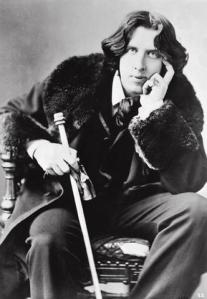 People sometimes inquire what form of government is most suitable for an artist to live under. To this question there is only one answer. The form of government that is most suitable to the artist is no government at all.
– Oscar Wilde, The Soul of Man Under Socialism

Fare well, one of our favorite wordsmiths
William Safire (December 17, 1929 – September 27, 2009), Rules for Writers, from On Language
 Many politicians of our time are in the habit of laying it down as a self-evident proposition, that no people ought to be free till they are fit to use their freedom.
The maxim is worthy of the fool in the old story, who resolved not to go into the water till he had learnt to swim. If men are to wait for liberty till they become wise and good in slavery, they may indeed wait for ever.
— Thomas Babington Macaulay, Essays Contributed to the ‘Edinburgh Review’ vol. 1 ‘Milton’ (1843)
 That principle is, that the sole end for which mankind are warranted, individually or collectively in interfering with the liberty of action of any of their number, is self-protection. That the only purpose for which power can be rightfully exercised over any member of a civilized community, against his will, is to prevent harm to others. His own good, either physical or moral, is not a sufficient warrant.
He cannot rightfully be compelled to do or forbear because it will be better for him to do so, because it will make him happier, because, in the opinions of others, to do so would be wise, or even right. These are good reasons for remonstrating with him, or reasoning with him, or persuading him, or entreating him, but not for compelling him, or visiting him with any evil, in case he do otherwise.
— John Stewart Mill, On Liberty ch. 1 (1859)
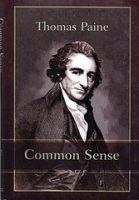
Common Sense, the book advocating secession from the British empire and credited with starting the Revolution, was the top-selling book of the 18th century, globally.
Government, even in its best state, is but a necessary evil; in its worst state, an intolerable one.
Government, like dress, is the badge of lost innocence; the palaces of kings are built upon the ruins of the bowers of paradise.
— Thomas Paine, Common Sense
 Hence the less government we have the better–the fewer laws and the less confided power.
The antidote to this abuse of formal government is the influence of private character, the growth of the Individual; the appearance of the principal to supersede the proxy; the appearance of the wise man; of whom the existing government is, it must be owned, but a shabby imitation.
— Ralph Waldo Emerson, Politics (1844)
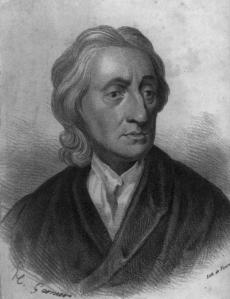 The end of Law is not to abolish or restrain, but to preserve and enlarge Freedom.
— John Locke, Two Treatises of Government (1689)
 It was pleasant to me to get a letter from you the other day. Perhaps I should have found it pleasanter if I had been able to decipher it. I don’t think that I mastered anything beyond the date (which I knew) and the signature (which I guessed at).
There’s a singular and a perpetual charm in a letter of yours; it never grows old, it never loses its novelty…Other letters are read and thrown away and forgotten, but yours are kept forever
– unread. One of them will last a reasonable man a lifetime.
– Thomas Aldrich, letter to Professor E.S. Morse, circa 1889
 The mind is like the stomach. It is not how much you put into it that counts, but how much it digests.
— Albert Jay Nock
Source unknown; if you can help, let us know
You Own Your Own Life…
To lose your Life is to lose your Future, to lose your Liberty is to lose your Present
…and to lose the product of your Life and Liberty is to lose that portion of your Past that produced it
A product of you Life and Liberty is your Property
— Ken Schoolland, The Philosophy of Liberty
 Imagine if all of life were determined by majority rule.
– P.J.O’Rourke, Parliament of Whores (1991)
The Tyranny of the Majority, vs the Unanimity of Liberty
 The political principle that underlies the market mechanism is unanimity. In an ideal free market resting on private property, no individual can coerce any other, all cooperation is voluntary, all parties to such cooperation benefit or they need not participate.
— Milton Friedman, The Social Responsibility of Business is to Increase its Profits, The New York Times Magazine
The Tyranny of the Majority, vs the Unanimity of Liberty
 Can any of you seriously say the Bill of Rights could get through Congress today?
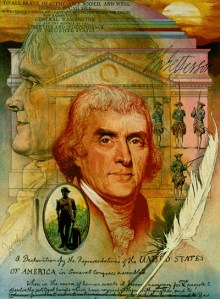 Sometimes it is said that man can not be trusted with the government of himself. Can he, then, be trusted with the government of others? Or have we found angels in the forms of kings to govern him?
– Thomas Jefferson, First Inaugural Address (1801)
 Scientists tell us that the fastest animal on earth, with a top speed of 120 ft/sec, is a cow that has been dropped out of a helicopter.
 The smallest minority on earth is the individual. Those who deny individual rights cannot claim to be defenders of minorities.
– Ayn Rand, Capitalism: The Unknown Ideal
 I don’t make jokes, I just watch the government and report the facts.
– Will Rogers, Saturday Review (25 August 1962)
 If you think health care is expensive now, wait until you see what it costs when it’s free.
– P. J. O’Roarke, The Liberty Manifesto
Who Are the 47 Million Uninsured?
 Suppose two-thirds of the members of the national House of Representatives were dumped into the Washington garbage incinerator tomorrow, what would we lose to offset our gain of their salaries and the salaries of their parasites?
– H. L. Mencken, Prejudices, the Second Series1924
 But Now You Know
 The best Jihad


 Words of the Sentient